
Washington County Criminal Court Cases
Washington County criminal court cases follow the state trial-court structure. Superior Court tries felonies. District Court tries misdemeanors and infractions and conducts initial criminal proceedings. Plymouth, Roper, and Creswell do not operate separate municipal courts, so a town arrest still enters the county-served District or Superior Court system. The exact charge in the clerk's file controls. A booking label can later be amended, reduced, dismissed, or replaced.
The elected Clerk of Superior Court maintains both levels of case records at the Washington County courts hub. The clerk's office is on the first floor at 120 Adams Street in Plymouth, with the courtroom on the second floor. Brian Phelps is the named clerk. The office can be reached at 252-791-4000, and mailed requests go to PO Box 901, Plymouth, NC 27962. A reader seeking the prosecution history should start here, not with a jail entry.
The official Judicial Branch county hub shows where court services and calendars sit online.
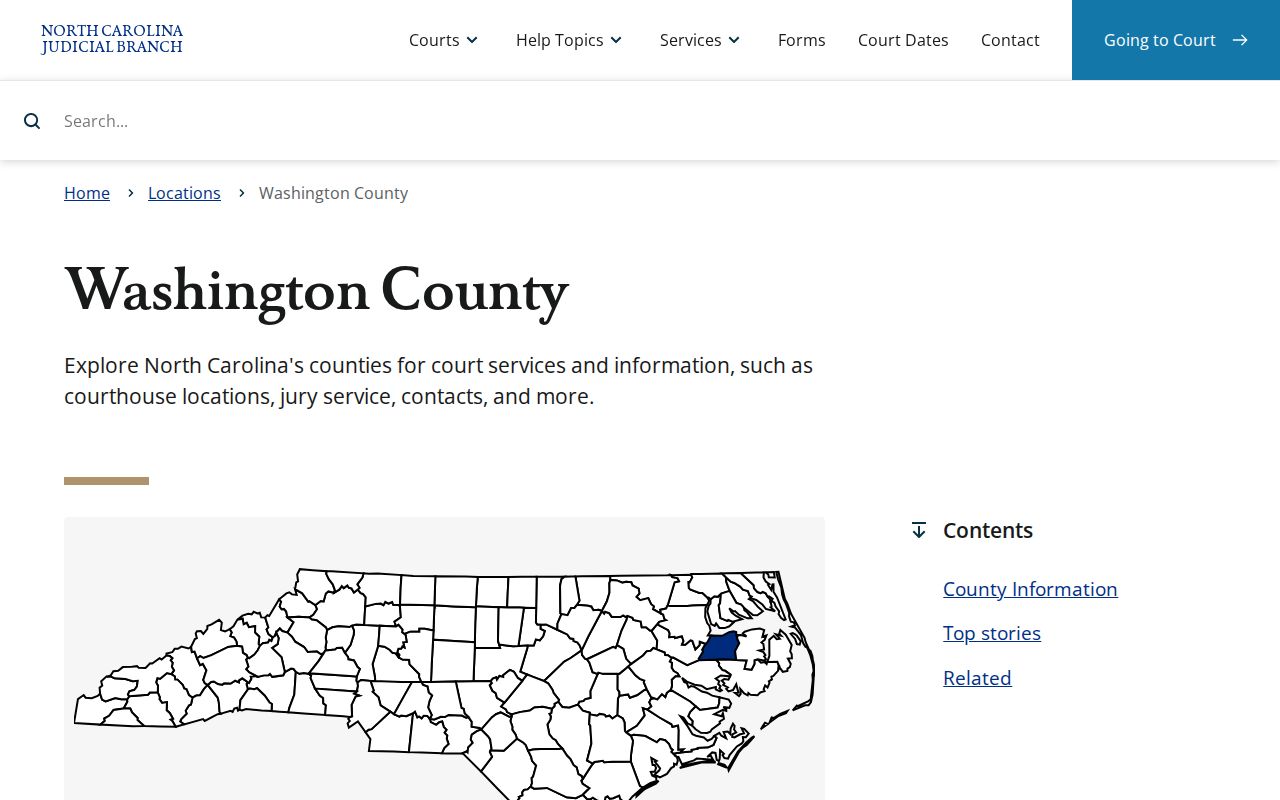
That hub routes Washington County court users to calendars, forms, local rules, contacts, and eCourts services.
Smart Search Washington County Cases
North Carolina completed its statewide eCourts conversion in October 2025. Washington County criminal case records now appear in Enterprise Justice through the official eCourts overview and its Portal entry point. Anonymous users may search public information without registering. Registration adds saved activity and My Cases, but it does not unlock records that law or access level keeps restricted.
The eCourts overview shows the statewide service layer that now includes all North Carolina counties.
For a local search, select Washington County through Portal filters and compare each result by case number, party, filing date, and case status.
Searching Washington County Case Records
Use the eCourts Portal for free remote docket access. A case number is the strongest key. A party name also works, though shared names make location and filing filters important. Portal is not the official certified background-check product, and not every filed document is remotely visible.
- Open Portal Smart Search and enter a party name or case number.
- Set Washington County as the location and add case status, case type, or filing dates when needed.
- Compare the case number and party details before opening a result.
- Read the Case Summary and Register of Actions through disposition and financial entries.
- Ask the Washington County clerk for the paper file, a copy, or certification when the remote view is incomplete.
| Field Label | Type | Required | Notes |
|---|---|---|---|
| Smart Search | Text | One query | Party Name or Case Number is the default. |
| Case Number | Text | No | Two-digit year, letters, six-digit sequence, and county identifier; wildcard allowed after four characters. |
| Party Name | Text | No | Wildcards need at least three surname characters and one given-name character. |
| General Options | Filters | No | Location and search type narrow Washington County results. |
| Case Criteria | Filters | No | Case type, status, and filing-date range. |
| Search Hearings | Portlet | No | Case, party, attorney, judicial officer, or courtroom. |
Certified Washington County Court Files
Portal results and courthouse-terminal searches are not certified copies. The Judicial Branch record instructions direct a requester to the clerk in the county where the case was filed. Washington County offers a free public terminal for county or statewide searches. Paper files may be inspected at the clerk, while copies carry a fee that should be confirmed before ordering.
The official obtaining-records page explains the difference between online case information, courthouse inspection, copies, and certified records.
Use the clerk route when a court filing is not visible remotely or when the record must bear official certification.
Inside a Washington County Case File
A Washington County criminal case file offers more procedural detail than an arrest record or SBI rap sheet. Portal documentation groups data into case information, assignments, parties, attorneys, criminal actions, events, dispositions, hearings, and financial information. The paper file may contain documents not available to an anonymous remote user. Read the chronological register alongside the final judgment so an early allegation is not mistaken for the outcome.
| Case Number and Court | Identifies the matter and whether it follows the District or Superior Court track. |
|---|---|
| Parties and Attorneys | Names the defendant, state, and counsel shown in the public summary. |
| Criminal Actions | Shows charges or causes recorded in the court system. |
| Register of Actions | Lists dated events and filings in chronological order. |
| Hearings | Shows scheduled or completed court events when public. |
| Disposition and Judgment | Records how the court resolved a charge and the resulting judgment details. |
| Financial Information | Shows eligible costs, fees, restitution, or related entries when applicable. |
Washington County Felony and Misdemeanor Tracks
North Carolina sends felony trials to Superior Court and misdemeanor trials to District Court. District Court also handles initial criminal proceedings, so a felony matter can show early events there before moving on. The same elected clerk serves both courts at the Plymouth courthouse. This shared custody does not make the tracks identical.
| Track | Main Role | Record Reading Point |
|---|---|---|
| District Court | Misdemeanor trials, infractions, and initial criminal proceedings | Check whether the matter ended there or moved to the felony track. |
| Superior Court | Felony trials | Read the final charge, disposition, judgment, and sentence. |
North Carolina uses felony Classes A through I under G.S. 14-1.1 and misdemeanor Classes A1, 1, 2, and 3. The felony punishment rules and misdemeanor punishment rules show why a class alone does not prove the sentence. Prior-record level and the final judgment matter too.
How a Criminal Case Moves
The court file begins with charges actually filed, not simply the label used at arrest. Arraignment and pretrial entries follow. A plea can resolve the matter, while a contested case may proceed to trial. The disposition answers what happened to each charge. Sentencing follows a conviction, and the judgment is the best source for the penalty imposed.
Case flow: Charges Filed → Arraignment → Pretrial → Plea or Trial → Disposition → Sentencing
Washington County local resources also list bail and pretrial-release policy, failure-to-appear policy, probation-violation first-appearance rules, and motions for appropriate relief. Those rules help explain docket entries without replacing the order or judgment itself.
Note: A booking charge may change before filing, so match the arrest event to the court case number and final disposition.
Washington County Portal Limits
A Portal result can be accurate yet incomplete for the question being asked. Public access depends on the user's approved access level, and not every filed document appears remotely. The official Portal FAQ also distinguishes the online summary from the clerk's official record. If an oversized document returns error 141011, the recommended path is to contact the clerk and ask whether the file can be split into smaller parts.
Name searches have their own traps. A broad wildcard can flood the result list, while an exact spelling can miss a variant. Start with a case number when known. Otherwise, use the minimum documented wildcard pattern, set Washington County as the location, and compare filing dates and case status. Search Hearings can also use a party, attorney, judicial officer, or courtroom. These tools help locate the case, but the clerk resolves uncertainty about the official file.
Note: Portal access is a finding aid, while a certified Washington County court record comes from the filing-county clerk.
Brian Phelps's Washington County Clerk Office
The court contact directory is the practical source for a case that resists online search. The Clerk of Superior Court line is 252-791-4000. Magistrates are listed at 252-791-4019, the District Attorney at 252-940-4010, District Court judges at 252-940-4012, and Superior Court judges at 252-940-4016. Call the clerk first for file custody and copy questions.
The official court directory brings the Washington County court contacts together on one government page.
Before visiting, identify the case number, party name, court level, and exact item needed to help staff locate the right file.
Clerk of Superior Court
120 Adams Street
Plymouth, NC 27962
Mail: PO Box 901
252-791-4000
Monday through Friday, 8:30 a.m. to 5:00 p.m.
Payment methods depend on how an eligible court payment is made. By mail, the Washington County clerk accepts only a money order or certified check payable to the Clerk of Superior Court, not cash or a personal check. At the counter, the listed methods are cash, money order, certified check, MasterCard, Visa, American Express, and Discover. Card processing fees apply. A personal check is not accepted through either route. These payment rules concern eligible court obligations, not a published copy-fee schedule. Confirm the current charge for a search, copy, or certification with the clerk before sending funds.
Case Record Access and Restrictions
Public court access differs from access to a police investigative file. Returned warrants, indictments, criminal summonses, and nontestimonial identification orders are public court records unless sealed. Unreturned warrants do not become public under that rule. Juvenile, sealed, expunged, victim-protected, and other confidential material can also be withheld or absent from the public Portal view.
The Washington County Courthouse page confirms the records location, weekday hours, access details, and limited parking on court days.
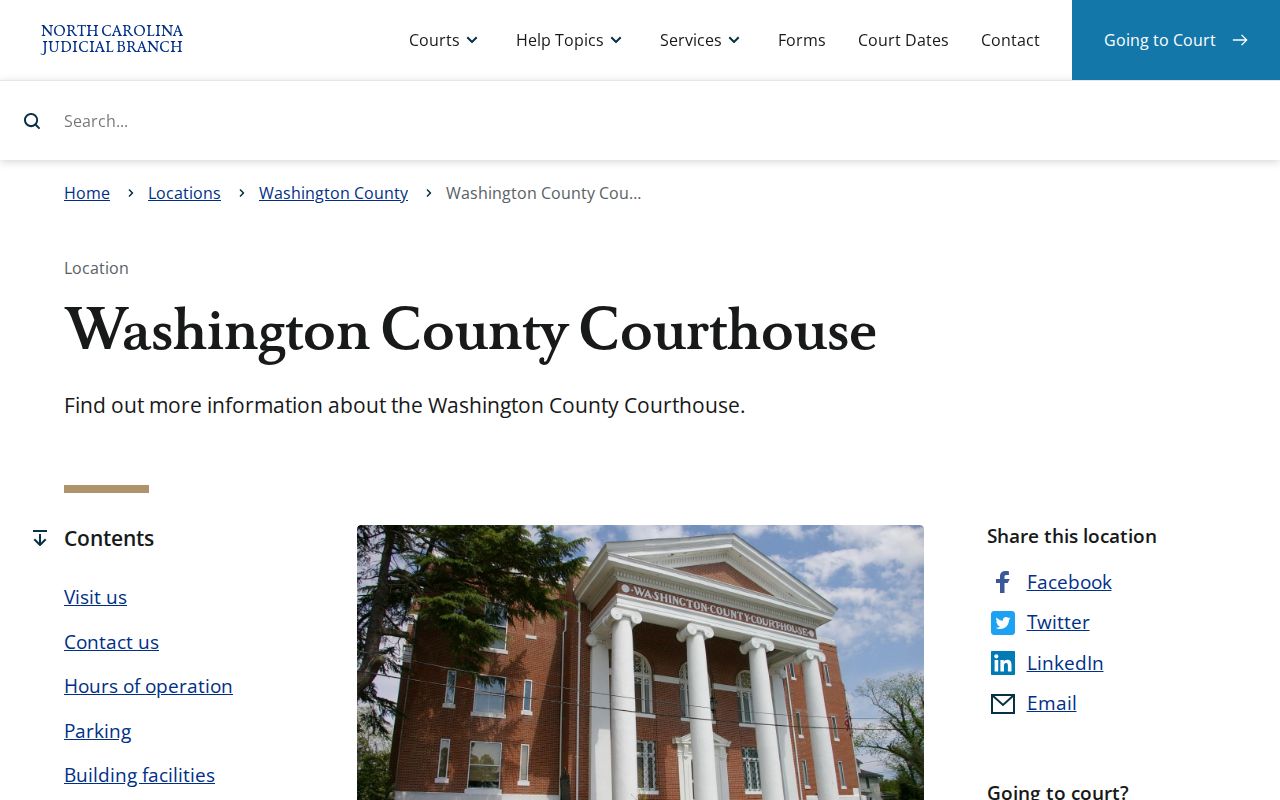
The courthouse is the fallback for a paper-file inspection or certified copy when Portal does not show the needed record.
A blank remote search is not conclusive. Try name variants, a case number, a free clerk terminal, and the paper file. For an expunged matter, ask the originating clerk about the official record rather than treating a stale private entry as current court data.